


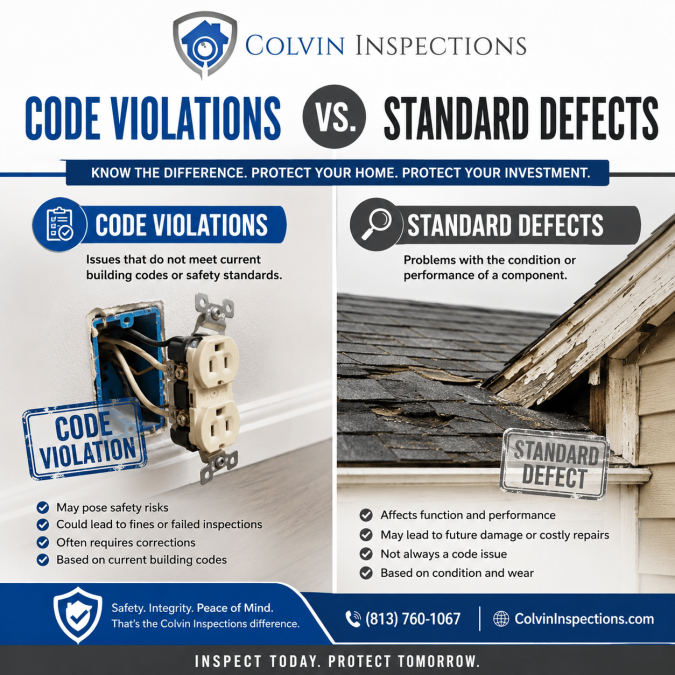
Critical Code Violations vs. Standard Defects: Understanding the Difference During a Home Inspection
Buying a home is one of the biggest financial decisions most people will ever make. During the process, buyers often rely on a professional home inspection to uncover potential concerns before closing. However, one of the most misunderstood topics in the industry involves code violations vs standard defects.
Many homebuyers assume that every issue discovered during an inspection automatically means the property violates building codes. Others believe that if something isn’t a code violation, it isn’t a serious concern. Both assumptions can lead to confusion, poor decisions, and unrealistic expectations.
At Colvin Inspections, our certified master inspectors regularly explain the difference between these two categories because understanding them can help buyers make informed decisions, negotiate effectively, and prioritize repairs properly.
This guide explains:
- What code violations are
- What standard defects are
- How inspectors identify issues
- Why age matters
- How safety concerns fit into inspections
- How these findings affect negotiations
- What buyers and sellers should prioritize
Let’s break down the differences.

What Are Building Code Violations?
Building codes are rules and regulations developed to establish minimum safety and construction standards for homes and buildings. These standards are designed to help protect occupants from structural failures, electrical hazards, fire risks, plumbing issues, and other dangers.
A code violation occurs when a property component fails to meet the requirements established by applicable building regulations.
Examples may include:
- Missing required handrails
- Improper electrical wiring methods
- Insufficient stair dimensions
- Incorrect plumbing venting
- Unsafe deck construction
- Missing smoke detectors
- Improper grounding systems
- Inadequate egress windows
Building codes are continuously updated. What meets today’s standards may differ significantly from requirements established 20, 30, or even 50 years ago.
This creates one of the largest misunderstandings in the code violations vs standard defects discussion.
Just because something does not meet today’s building standards does not automatically make it defective.

What Are Standard Defects?
Standard defects are conditions found during a home inspection that indicate damage, deterioration, improper installation, wear, malfunction, or potential future problems.
These defects may impact:
- Functionality
- Performance
- Safety
- Structural integrity
- Property value
Examples include:
- Roof leaks
- Cracked foundations
- Water intrusion
- HVAC failures
- Broken windows
- Damaged siding
- Plumbing leaks
- Moisture damage
- Rotting wood
- Damaged flooring
Unlike code violations, defects focus on whether something is performing properly rather than whether it complies with current regulations.
Why Home Inspectors Usually Do Not Perform Code Compliance Inspections
Many buyers are surprised to learn that standard home inspections generally are not code compliance inspections.
A professional home inspection primarily evaluates:
- Visible systems
- Major components
- Functional performance
- Safety concerns
- Defects affecting the property
Inspectors are not typically acting as municipal code enforcement officials.
This distinction matters because homes built decades ago may contain numerous components that do not meet current building requirements while still functioning as originally intended.
For example:
A home built in 1975 may have:
- Two-prong electrical outlets
- Lower insulation levels
- Stair rail spacing that differs from modern standards
- Older window designs
None of these automatically indicate a defect requiring immediate replacement.
The Importance of Grandfathered Conditions
One major concept buyers should understand is “grandfathering.”
A grandfathered condition means a feature was legally installed according to standards existing at the time of construction.
Examples include:
Older Electrical Panels
A panel installed according to requirements from decades ago may not comply with modern recommendations today.
Stair Construction
Older staircases often have dimensions that differ from current code requirements.
Ceiling Heights
Older homes may have lower ceiling heights than newer construction standards require.
Outlet Placement
Electrical outlet spacing requirements have evolved over time.
Being outdated does not necessarily mean defective.
However, inspectors may still identify safety concerns even if an item was acceptable when originally installed.
Code Violations vs Standard Defects: Major Differences
While the chart simplifies the topic, the main distinction is:
Code Violations
Focus on:
- Regulatory requirements
- Building standards
- Construction compliance
- Safety minimums
Standard Defects
Focus on:
- Actual condition
- Damage
- Performance
- Functionality
- Safety concerns
Real-World Examples of Code Violations vs Standard Defects
Example 1: Missing GFCI Protection
Suppose a kitchen outlet near a sink lacks Ground Fault Circuit Interrupter protection.
In a modern home:
This could represent a code issue and a safety concern.
In an older home:
The outlet may have been installed before current requirements existed.
Inspectors often report it as:
“Recommend upgrading for improved safety.”
Example 2: Active Roof Leak
Imagine water stains on the ceiling with active moisture detected.
This is generally a standard defect, not necessarily a code violation.
The concern involves:
- Damage progression
- Mold potential
- Structural deterioration
- Future repair costs
Example 3: Improper Deck Construction
A deck with improperly attached ledger boards may create:
- Structural instability
- Safety hazards
- Potential code concerns
This issue may overlap both categories.
Example 4: Cracked Foundation Wall
Foundation cracking is generally considered a defect because it affects structural performance.
Potential concerns include:
- Settlement
- Water intrusion
- Structural movement
Example 5: Missing Handrails
Modern codes require handrails in specific circumstances.
A missing handrail could represent:
- A code concern
- A safety concern
- A potential defect
Again, overlap can exist.
Safety Concerns Matter More Than Technical Labels
One of the biggest mistakes buyers make is becoming focused solely on whether something is officially considered a code violation.
The more important question is:
Does this create a safety issue?
For example:
- Exposed wiring
- Trip hazards
- Loose railings
- Carbon monoxide concerns
- Fire hazards
- Structural instability
These conditions deserve attention regardless of whether they technically violate current codes.
Certified master inspectors prioritize identifying safety concerns because they directly affect occupants.
How Home Age Changes Inspection Findings
New construction and older homes are evaluated differently.
New Construction Homes
New homes generally should meet:
- Current codes
- Modern installation standards
- Current safety requirements
Issues discovered may indicate:
- Contractor mistakes
- Oversights
- Incomplete work
Examples:
- Missing flashing
- Improper wiring
- HVAC installation problems
- Plumbing defects
Older Homes
Older homes often contain systems and materials reflecting construction practices of their era.
Examples:
- Aluminum wiring
- Galvanized plumbing
- Older insulation standards
- Original windows
Inspectors focus on:
- Condition
- Performance
- Safety implications
How Findings Affect Home Negotiations
Inspection findings frequently become negotiation points.
Understanding code violations vs standard defects helps buyers determine what requests are reasonable.
Higher Priority Negotiation Items
Buyers often prioritize:
- Active leaks
- Structural concerns
- Electrical hazards
- HVAC failures
- Water damage
- Safety hazards
Lower Priority Items
Less urgent findings may include:
- Cosmetic concerns
- Minor wear
- Aging but functional components
Not every issue should become a repair demand.
Strong negotiations focus on meaningful concerns rather than creating long lists of minor items.
What Sellers Should Understand
Sellers sometimes become frustrated when inspection reports identify concerns they believe are “normal.”
Remember:
Normal aging does not always eliminate concerns.
A roof near the end of its life expectancy may still function today but could represent a significant future expense.
Sellers should understand that buyers evaluate:
- Repair costs
- Future maintenance
- Safety risks
- Budget impacts
Preparing ahead can reduce surprises.
Pre-listing inspections frequently help sellers:
- Identify major concerns early
- Reduce negotiation challenges
- Improve buyer confidence
- Streamline transactions
Common Misconceptions About Code Violations vs Standard Defects
Myth #1: Every Defect Is A Code Violation
Reality:
Many defects involve deterioration or damage rather than code compliance.
Myth #2: Older Homes Must Meet Current Codes
Reality:
Most homes are not required to undergo complete upgrades simply because standards change.
Myth #3: If It Passed Previous Inspections, There Cannot Be Problems
Reality:
Conditions change over time due to:
- Aging
- Weather exposure
- Deferred maintenance
- Renovations
- Wear and tear
Myth #4: Minor Defects Can Be Ignored
Reality:
Small issues often become expensive repairs if neglected.
Minor roof damage can become water intrusion.
Small plumbing leaks can create extensive moisture damage.
Loose flashing can eventually lead to structural deterioration.
Why Certified Master Inspectors Matter
Not all inspectors possess the same training, experience, or reporting quality.
At Colvin Inspections, our certified master inspectors focus on delivering detailed evaluations that help clients understand:
- Current conditions
- Safety concerns
- Major defects
- Maintenance recommendations
- Future considerations
Rather than simply producing a checklist, a professional inspection should help clients understand the “why” behind findings.
Knowledge leads to smarter decisions.
Questions to Ask After Receiving Your Inspection Report
After reviewing your inspection report, consider asking:
- Which findings involve immediate safety concerns?
- Which defects require urgent repairs?
- Which issues are maintenance-related?
- Which concerns may become larger expenses later?
- What should be prioritized after purchase?
These conversations help transform inspection findings into practical action plans.
Prioritizing Repairs After Closing
Once you purchase a home, consider prioritizing repairs in this order:
Safety First
Examples:
- Electrical hazards
- Gas leaks
- Structural concerns
- Fire risks
Water Intrusion Prevention
Examples:
- Roof leaks
- Drainage issues
- Plumbing leaks
Major Systems
Examples:
- HVAC
- Plumbing
- Electrical systems
Maintenance Items
Examples:
- Caulking
- Weather stripping
- Cosmetic repairs
This approach prevents minor issues from becoming expensive future problems.
Final Thoughts: Understanding Code Violations vs Standard Defects
The discussion surrounding code violations vs standard defects often creates confusion among buyers and sellers alike. While building codes establish minimum standards for construction, home inspections primarily focus on condition, functionality, and safety.
Not every issue discovered during a home inspection represents a code violation, and not every code concern creates an immediate defect.
The most important factors remain:
- Safety
- Structural integrity
- Performance
- Long-term cost implications
Whether purchasing a first home, selling a property, or investing in real estate, understanding these distinctions can help you make confident decisions and avoid unnecessary surprises.
Contact Colvin Inspections
At Colvin Inspections, we provide comprehensive inspection services designed to help buyers, sellers, and homeowners make informed decisions with confidence. Our certified master inspectors deliver detailed evaluations that go beyond a checklist, helping you understand defects, safety concerns, and potential future issues before they become costly problems.
If you’re looking for trusted inspection services in the Tampa Bay area, contact Colvin Inspections today and schedule your professional home inspection Tampa FL service.
Code Violations vs Standard Defects
Comparison of common characteristics inspectors evaluate.
| category | score |
|---|---|
| Current code compliance | 3 |
| Safety risk potential | 9 |
| Functional performance | 10 |
| Age-related concern | 8 |
| Repair urgency | 9 |
Leave a Reply